What can a simple pole in the ground teach us about peace? Quite a lot, especially when it honors someone who has spent a lifetime putting peace into practice. On November 7, the Rotary Club of Woodstock dedicated a new Peace Pole honoring Reverend John Hudson, whose remarkable journey includes marching alongside Dr. Martin Luther King Jr. But this story is about more than a dedication ceremony. It's about why peace matters, what one man's life can teach us, and how each of us can help build a more peaceful community.
By Scott Brix, Rotary Club of Woodstock
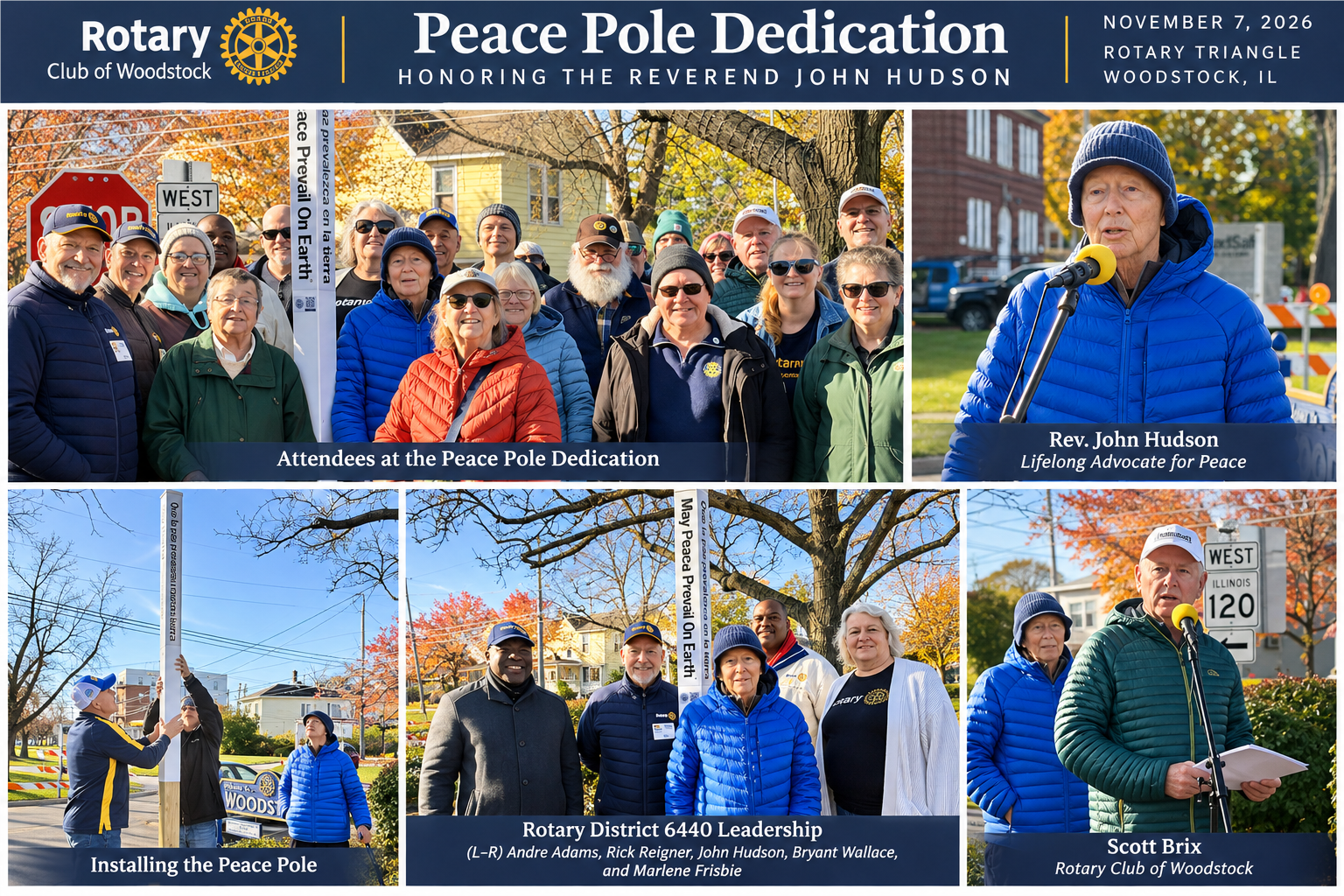
Last Saturday morning, November 7, a group of Rotarians, community leaders, and Woodstock residents gathered at Rotary Triangle, at the intersection of Illinois Route 120, North Madison Street, and Newell Street, to dedicate something rather unusual—a Peace Pole.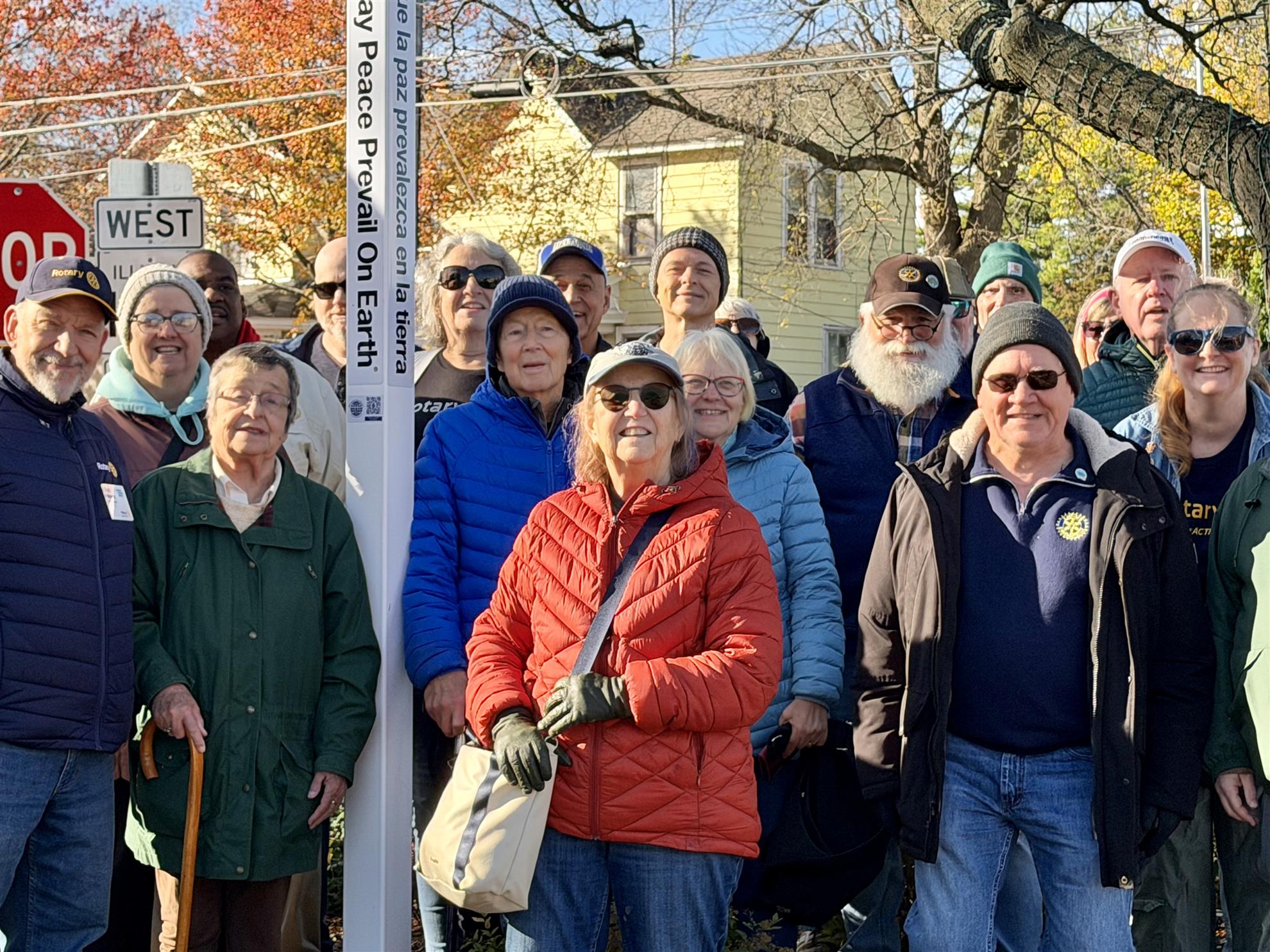
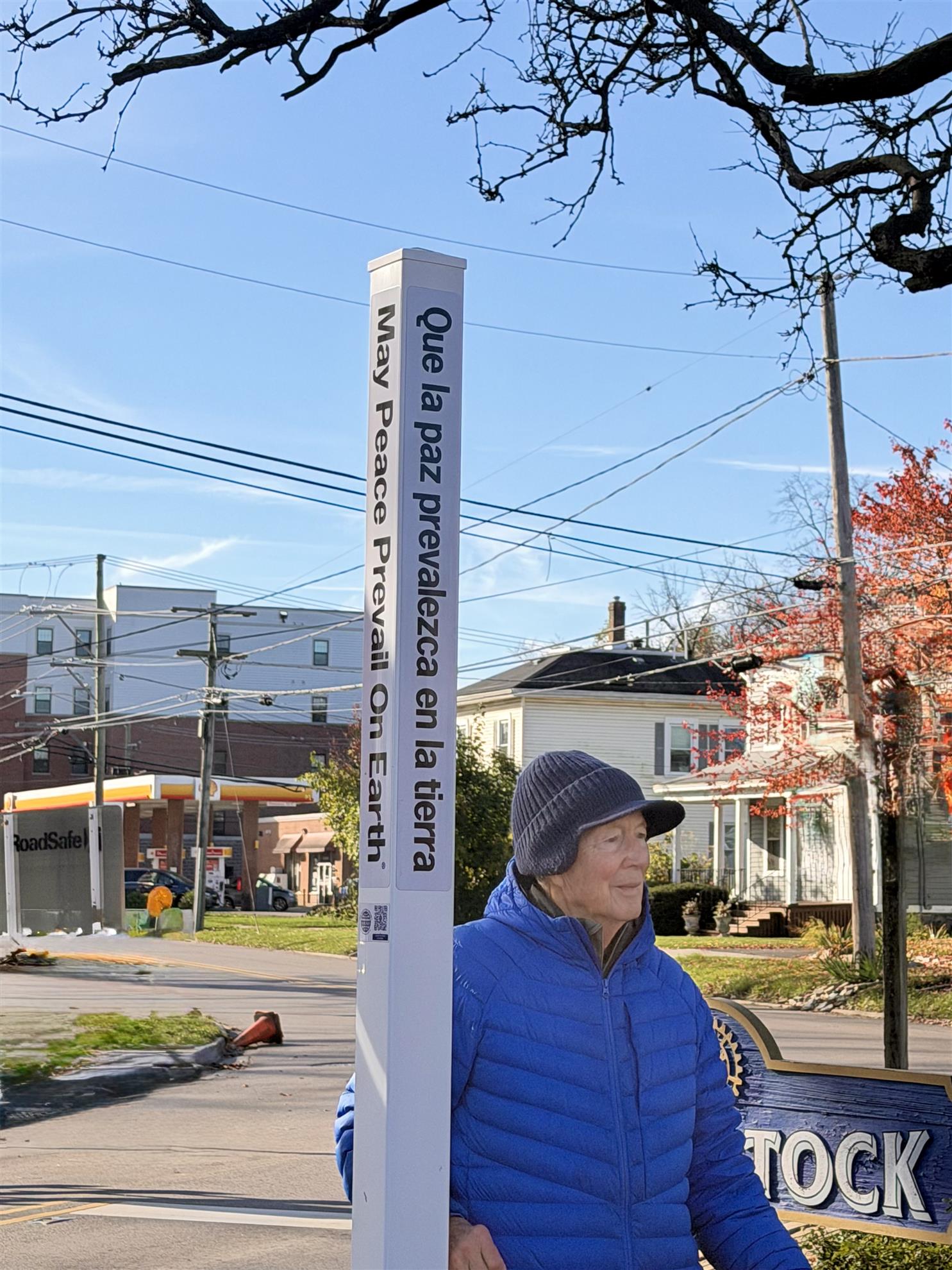
It's a simple monument, carrying just five words:
“May Peace Prevail on Earth.”
Those words appear in four languages—English, Spanish, Polish, and Tagalog—reflecting the diversity of people who call Woodstock home.
But why would Rotary install a Peace Pole? And why dedicate it to one of our own residents, the Reverend John Hudson?
Most people know Rotary for the service projects we undertake in our communities and around the world. What many may not know is that promoting peace is one of Rotary International's seven areas of focus.
Rotary believes that peace is more than simply the absence of war. It's about building understanding, strengthening relationships, resolving differences, and creating communities where people can live together with dignity and respect.
And we believe peace begins right here, in our own communities.
The Peace Pole movement began in Japan following the devastation of World War II. Today, more than 250,000 Peace Poles stand in communities around the world, all carrying the same simple message.
Our installation is part of a larger initiative by Rotary District 6440 to install 125 Peace Poles throughout northern Illinois by 2030, when Rotary International celebrates its 125th anniversary at its international convention in Chicago, where Rotary was founded in 1905.
But for me, the most meaningful part of Saturday's ceremony was honoring John Hudson.
John is a longtime Woodstock resident and retired United Methodist minister who spent 43 years serving churches throughout Chicago. But his ministry was never confined to the walls of a church.
Growing up during World War II, John was deeply troubled by the destruction and enormous loss of human life, particularly the introduction of atomic weapons. Those experiences helped shape his lifelong commitment to peace. During the Korean War, he took a stand as a conscientious objector, choosing to follow his convictions even when doing so was difficult.
During the civil rights movement of the 1960s, John challenged racial segregation in Chicago's schools and neighborhoods. He entered angry crowds during racial unrest, worked to reduce tensions between communities, and marched alongside Dr. Martin Luther King Jr. during a 1967 demonstration opposing the Vietnam War.
And his commitment didn't end with the civil rights movement. Throughout his ministry, John continued working to bring people together across racial and cultural boundaries, sometimes facing considerable opposition within his own congregations.
More recently, he helped organize our Rotary Club's Peace Essay Contest for Woodstock seventh graders, encouraging young people to think about what peace means and how they might help create it.
When I asked John what had inspired his remarkable commitment, he spoke about his experiences growing up during World War II. But he also pointed to something at the very heart of his Christian faith: the Love Commandment—to love your neighbor as yourself.
For John, those words were more than a religious teaching. They became a guiding principle for how he would live his life.
And that, I think, is what makes his example so powerful. John hasn't simply talked about peace. He has spent much of his life putting it into practice.
Saturday's dedication brought together Rotary leaders from throughout Chicagoland, including District Governor Rick Reigner, District Governor Nominee Bryant Wallace, District Governor Nominee Designate Andre Adams, and Immediate Past District Governor Marlene Frisbie, who is also a member of our Woodstock club.
I'm especially grateful to fellow Woodstock Rotarians Barb Groskinsky, Laura Cullotta, and Marlene Frisbie, who worked with me to bring this project to our community.
Now, we certainly don't imagine that planting a pole in the ground will somehow bring an end to war or conflict around the world. But I do believe symbols matter. They remind us of our shared values. They inspire conversations. And they challenge us to think about the kind of community—and the kind of world—we want to leave for future generations.
My hope is that years from now, someone walking or driving past Rotary Triangle will notice those five words and pause, even briefly, to consider what they mean. Perhaps they'll think about how they treat a neighbor, how they respond to someone with whom they disagree, or how they might help resolve a conflict rather than contribute to it.
Because peace isn't simply something we wish for. It's something we practice, through understanding, compassion, and the way we treat one another.
John Hudson has spent much of his life showing us what that looks like.
Our new Peace Pole is not simply a monument to peace. It's an invitation to practice peace.
And that begins with each of us, right here in Woodstock.