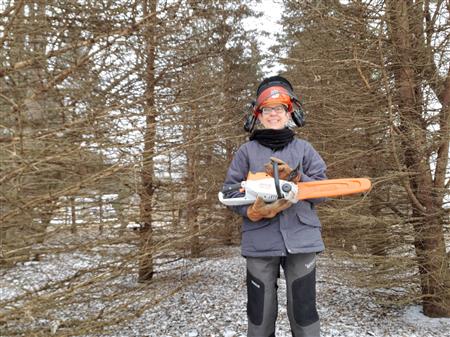
 | Twenty Five (25) years ago, when we bought our fixer-upper house on three acres, we discovered 102 holes- each roughly four feet wide and four feet deep. The previous owner had used a tree spade to remove and sell evergreens, leaving behind what looked like a landscape pockmarked by meteor strikes. That first summer, my kids and I filled every one of them. Three dump truck loads of dirt later, we had sore backs, tired arms, and the quiet satisfaction that comes from repairing something neglected. Read more. . . . | |||
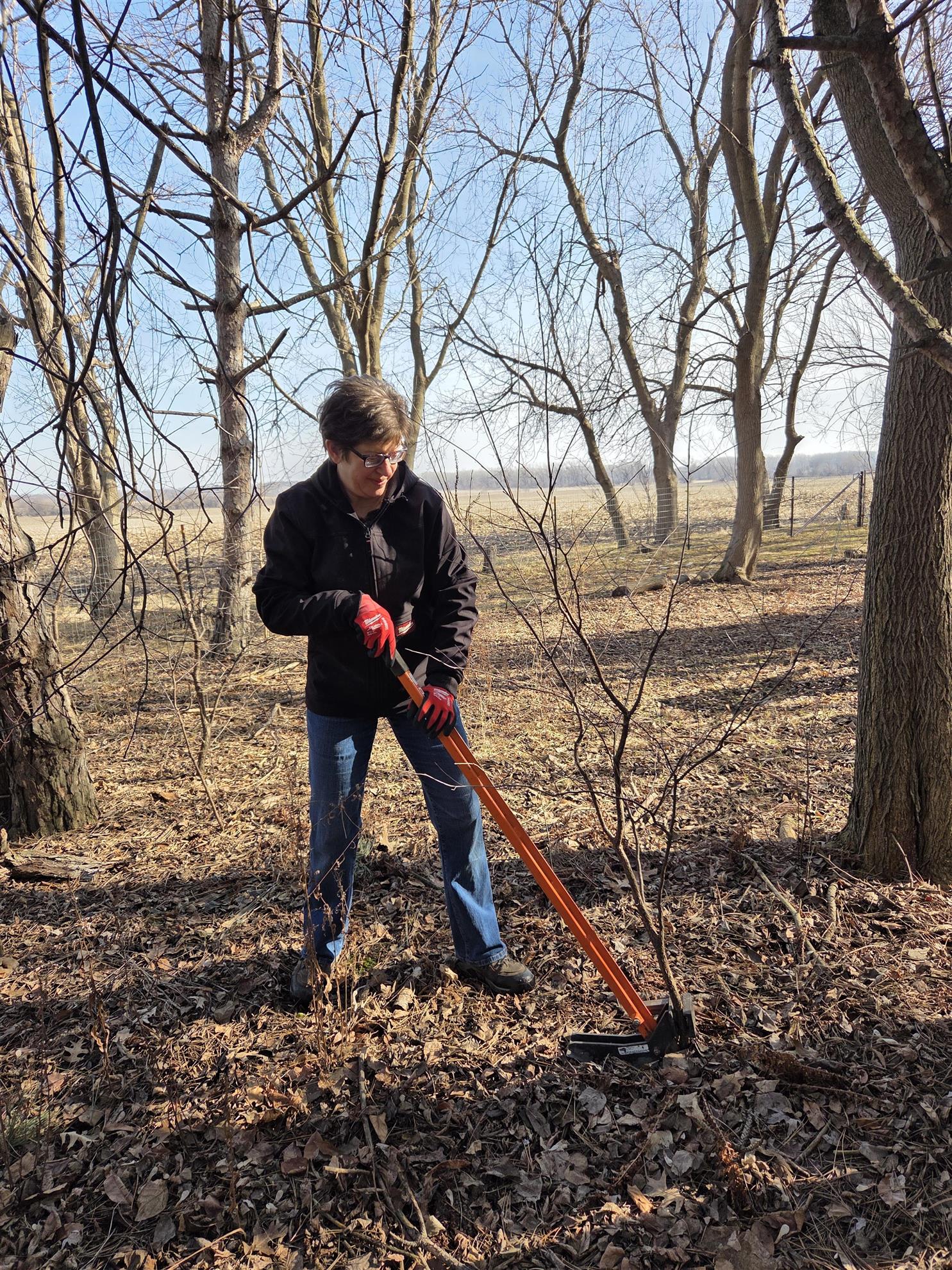
Years later, at a frog monitoring workshop, we were introduced to a tool called the Extractagator. By then, honeysuckle and buckthorn were steadily taking over the property. The first time I used that long-handled lever to pull a mature shrub with a huge root system out I felt the same deep satisfaction as filling those holes years before. Removing an invasive species cleanly, knowing it won’t resprout, feels empowering, and provides hope for the future.
Recently, I realized that land stewardship mirrors Rotary’s Four-Way Test:
- Is it the truth? Invasive species really do crowd out native ecosystems- the evidence is visible once you start clearing them.
- Is it fair to all concerned? Giving native plants room to thrive restores balance for birds, frogs, pollinators, and future generations.
- Will it build goodwill and better friendships? Some of my favorite conversations have happened while using the Extractagator, swapping plants, or walking friends through what I now call “June’s Woods.” Today, June’s Woods is a shaded, fern-lined sanctuary where native plants are reclaiming ground once dominated by invasives.
- Will it be beneficial to all concerned? A healthier landscape supports wildlife, water quality, and the wider community. Just like using the leverage of our combined Rotarians- we are a powerful force for good.
- And our club’s fifth question- is it fun? Pulling a six-foot honeysuckle out of the ground with pure leverage is surprisingly satisfying. Watching native plants reclaim space year after year is even better.
What began with 102 holes, and later one well-designed tool, has grown into a property slowly returning to ecological health. I’d be happy to show you around- and if you’d like to try the Extractagator yourself, I promise it’s more enjoyable than it sounds.
Dorothy